Pool Pump Trips the Breaker
Overload Causes, Capacitor Faults, Jammed Impellers, and Safe Troubleshooting Steps
When a pool pump trips the breaker, it is telling you something is wrong with electrical load, motor condition, or mechanical resistance. A breaker trip is not something to ignore or reset repeatedly. Repeated tripping can damage the motor windings, overheat wiring, and increase fire risk. The goal is to identify whether the pump is drawing too much current because it cannot start, because it is overloaded while running, or because there is an electrical fault such as moisture or shorting.
This guide explains the most common reasons a pool pump trips the breaker, how to diagnose it safely, and what fixes usually solve the problem.
Breaker trip patterns: trips on start versus trips after running

The first clue is timing. If the breaker trips instantly when you switch the pump on, the pump is likely drawing high startup current due to a jam, a failed capacitor, or a motor fault. If the pump starts and runs for a while then trips, overheating, high load, poor ventilation, or internal motor wear becomes more likely.
This timing distinction matters because it changes what you check first. Startup trips are usually start circuit and mechanical binding. Running trips are usually heat, resistance, or winding breakdown under load.
Jammed impeller and mechanical binding causing locked rotor current
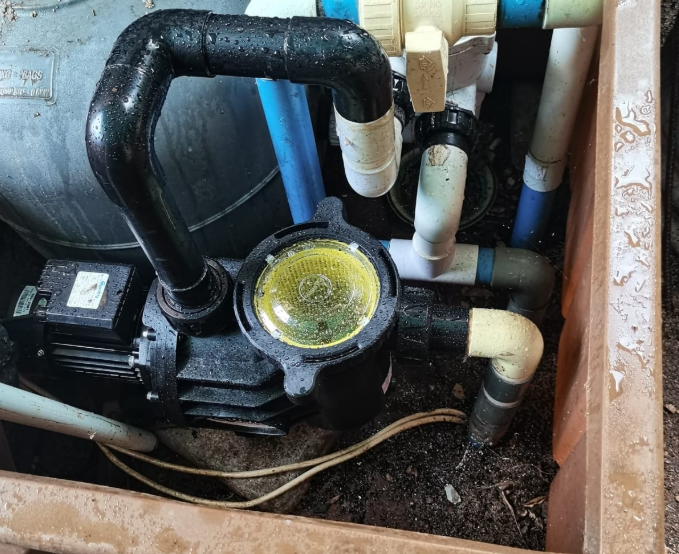
A jammed impeller can prevent the motor shaft from turning. When that happens, the motor draws locked rotor current, which quickly trips the breaker or thermal protection. This is common after storms, after heavy vacuuming, or when a pump basket is cracked and debris reaches the impeller throat.
With power isolated at the breaker, open the pump lid, remove the pump basket, and check the impeller opening behind the basket. Remove packed debris such as hair clumps, seed pods, grit, and plastic fragments. If you clear a jam and the pump starts normally, the breaker trip was caused by mechanical binding rather than an electrical fault.
Impeller jams are one of the most frequent causes of breaker trips because they create immediate overload conditions.
Start capacitor failure and humming motor symptoms
A failed start capacitor often causes a pump to hum without starting. The motor receives power but cannot develop enough starting torque. It sits drawing high current and trips the breaker. This often presents as a hum, followed by a trip within seconds.
Capacitor problems can be intermittent. The pump may start sometimes and trip other times. If the impeller is clear and the pump still hums and trips on startup, the start capacitor becomes a strong suspect. Capacitor testing and replacement involve electrical work and should be handled safely.
A run capacitor can also cause heat and inefficiency, leading to trips after running, especially if the motor is already under strain.
Simple Measurement Tests
The easiest way to tell the difference between evaporation and a leak is to perform the bucket test (we’ll go into detail later in the article). Essentially, you measure water loss inside a bucket placed in your pool and compare it to the pool’s water loss. If the pool is losing more than the bucket, you have a leak.
Keep in mind: heavy pool usage, splashing, and backwashing can also cause temporary water drops. Always rule those out first.
High filter pressure and return side restriction overloading the motor
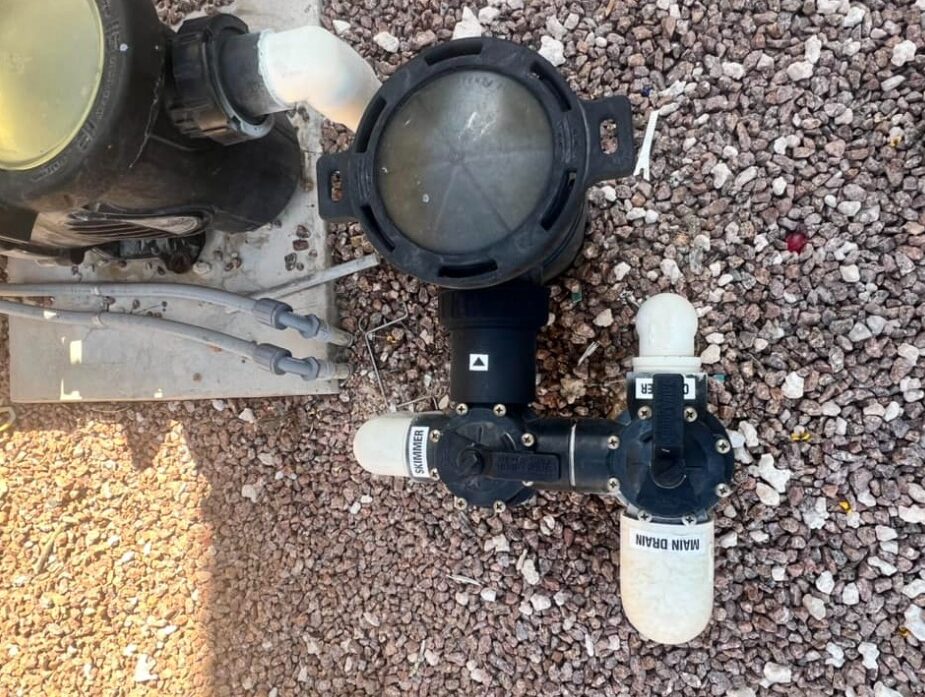
A pump can trip the breaker if it is working against excessive resistance. High filter pressure, blocked return jets, partially closed valves, heater loop restrictions, or bypass valve mispositioning can all increase load. The motor draws more current to maintain output and can overheat, leading to breaker trips.
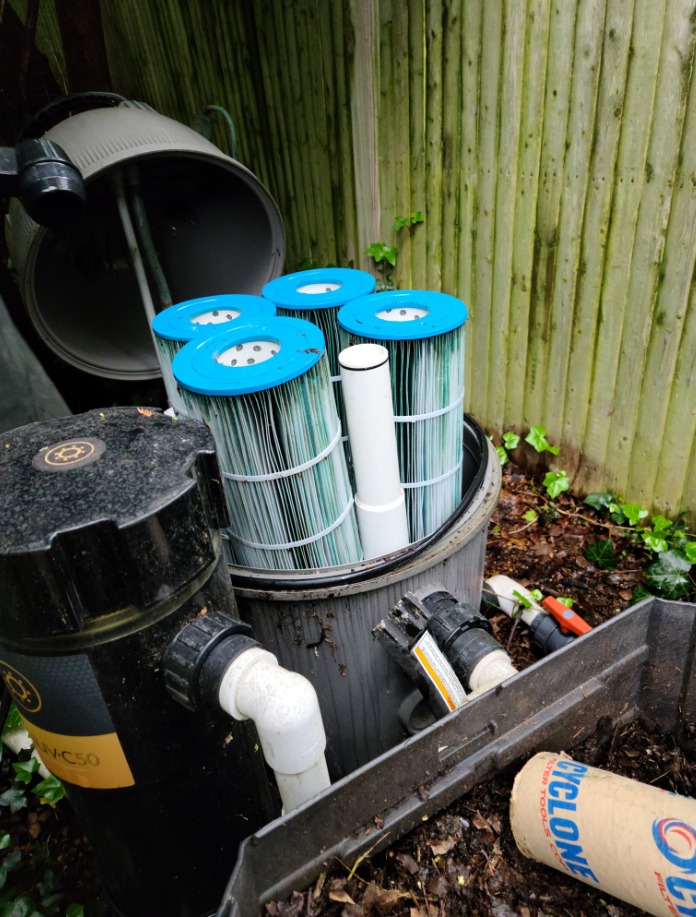
Check the filter pressure gauge. If pressure is higher than normal, clean the filter. Backwash and rinse sand filters. Clean cartridges properly. Backwash and recharge DE filters or deep clean grids. Confirm return valves are fully open and return eyeballs are not blocked.
If the pump stops tripping after filter cleaning and valve correction, the breaker trips were likely overload related rather than internal electrical failure.
Low voltage, loose wiring, and electrical supply instability
Low voltage causes motors to draw higher current to do the same work, which increases heat and can trip breakers. Loose terminals also create resistance and heat at connection points. In areas with unstable supply, voltage dips can cause repeated trips even when the pump is mechanically fine.
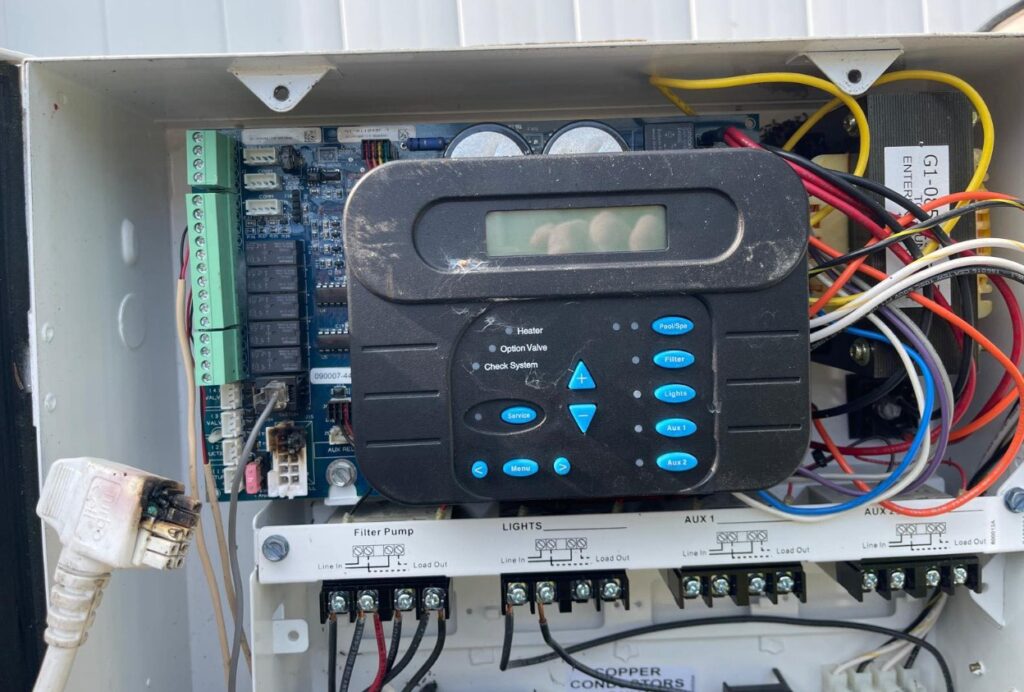
Symptoms of electrical supply issues include a pump that struggles to start, dimming lights when the pump starts, or tripping that coincides with heavy household load. Outdoor isolators and breaker panels can develop corrosion and loose terminals, which increases risk.
Electrical diagnosis should be done by qualified technicians because unsafe wiring can be dangerous. From a practical perspective, if the pump trips even with a clean filter, clear impeller, and stable prime, supply issues become a stronger suspect.
Water intrusion, motor insulation breakdown, and earth leakage trips
If moisture enters the motor housing, insulation can break down and current can leak to earth. This often trips earth leakage protection devices quickly. Water intrusion commonly comes from a failed shaft seal that allows water to migrate into the motor bearings and windings. It can also come from rain exposure in poorly protected installations.
Signs include rust staining on the motor, water dripping under the motor end, bearing noise, and immediate tripping when the pump is switched on. In these cases, continuing to run the pump can worsen damage quickly.
Repair often involves shaft seal replacement and, if the motor has been compromised, motor replacement.
Overheating and thermal overload cycling
Some motors trip after running because they overheat. Heat buildup can come from high filter pressure, poor ventilation, blocked motor vents, bearing wear, or failing capacitors. In some cases, the motor stops due to thermal overload, then restarts after cooling. Some homeowners describe this as the pump working for a while then dying, then coming back later.
Check ventilation around the motor. Ensure vents are clear and the motor is not enclosed without airflow. Check for bearing noise and vibration. Check for suction air leaks that cause cavitation and heat. Restore proper flow and reduce resistance. If overheating continues, internal motor condition may be poor.
Safe troubleshooting order that avoids damage
Isolate power first and avoid repeated resets. Check for visible water leaks under the motor and at the pump housing. Check baskets for debris and clear the impeller throat. Check filter pressure and clean the filter if pressure is high. Confirm valves are open and returns are not blocked. Confirm the pump is primed and not drawing air. If the pump still trips, suspect capacitor or motor faults and electrical supply issues.
This order solves the most common causes without replacing parts prematurely.
When to stop and call a professional
Stop and get professional help if the breaker trips instantly after basic checks, if you smell burning, if the motor is extremely hot, if there is visible water in the motor area, or if wiring and terminals appear damaged. Electrical faults can escalate quickly and should not be treated as trial and error.
A professional can test capacitor values, measure current draw, confirm voltage, and determine whether the motor windings are failing.
A pool pump trips the breaker because it is overloaded, jammed, starting poorly, overheating, or suffering electrical faults such as moisture intrusion or low voltage. Start with the common causes. Clear the impeller, clean baskets, reduce filter pressure, confirm valves and flow, and ensure ventilation. If trips persist, capacitor failure, motor insulation breakdown, or supply wiring issues become more likely and should be tested safely.
FAQs
1. How much water loss is normal for a pool?
About 1/4 to 1/2 inch per day from evaporation is normal in warm weather.
2. Can small leaks cause big damage?
Yes. Even a small leak can cause soil erosion, deck damage, and equipment strain over time.
3. How long does leak repair take?
Minor repairs can take a few hours. Major repairs may take several days.
4. Will insurance cover pool leak repairs?
5. How often should I check for leaks?
Get in touch for expert pool care

Need help? we are always here to assist you with expert care
Need Help
+27 10 065 1995
E-mail us
info@poolquest.co.za