Sand Filter Backwash Not Working
How to Spot the Cause and Fix It Fast
A sand filter is designed to do two jobs. In normal Filter mode it traps dirt inside the sand bed so your pool water stays clear. In Backwash mode it reverses the flow to lift and flush dirt out through the waste line. When backwash is working properly, pressure drops, return flow improves, and the pool starts polishing clear again. When backwash is not working, you get stuck in a frustrating loop where pressure stays high, flow stays weak, and the water stays cloudy even though you keep backwashing.
This article explains the real symptoms of a sand filter backwash problem, the most likely causes, and the correct fixes. It is written for a sand filter with a multiport valve, because that is the most common setup.
How you know backwash is not working
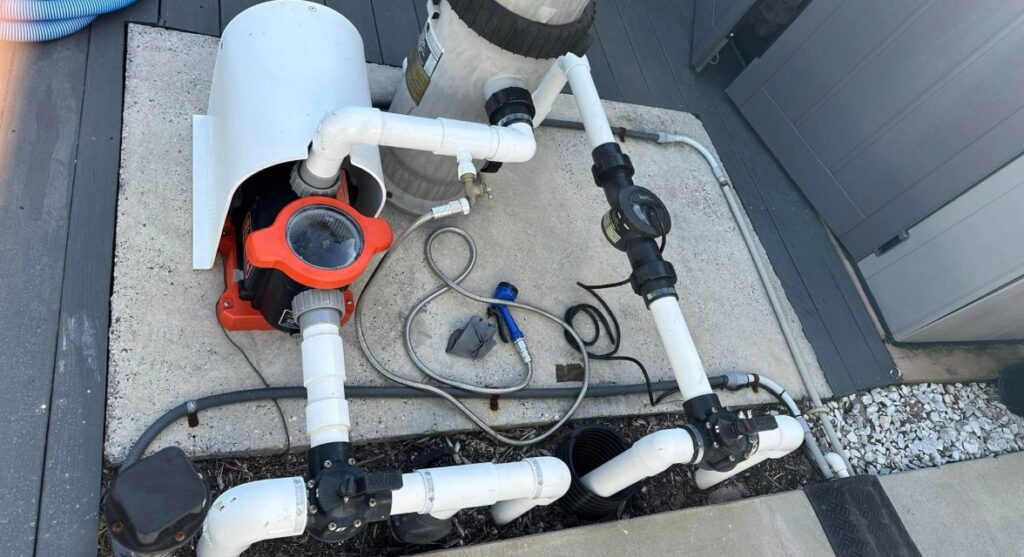
Backwash problems usually show up in one of two ways. Either the filter does not clean properly, or the multiport valve and waste pathway are not routing water correctly. You can see this in practical symptoms.
If pressure does not drop after a full backwash and rinse, the sand bed is not being cleaned effectively or the pressure reading is not reliable. If return jets remain weak after backwash, water is still being restricted by a dirty sand bed, a clogged impeller, a partially closed valve, or a blocked return. If the waste water never looks dirty during backwash, water may not be reversing through the sand bed at all, or the sight glass and discharge line may be bypassing the normal backwash path. If you see a cloudy burst from the return jets right after backwash, the rinse cycle may be skipped, or the valve may be leaking internally. If sand or dirt returns to the pool, the filter internals such as laterals or the standpipe may be damaged, or the wrong filter media was used.
These symptoms matter because they point to different fixes. The best repairs come from diagnosing the right category first instead of replacing parts blindly.
What backwashing should do when everything is healthy
In a healthy sand filter, backwash reverses flow through the sand bed. In Filter mode, water normally enters the top of the filter, flows down through the sand, and exits through laterals at the bottom. In Backwash mode, the multiport valve reverses this path. Water enters from below, lifts the sand bed slightly, frees trapped debris, and carries that debris out the waste line. Rinse then resets the sand bed by running water in the normal direction while still sending it to waste, so loose dirt does not shoot back into the pool.
The simplest sign that backwash is working is that waste water starts dirty then becomes clearer, the pressure gauge drops closer to baseline, and return jets feel stronger when you return to Filter.
The two things that most often break backwashing
Almost every backwash issue comes down to one of two problems.
The first is that the water is not actually being routed correctly through the multiport valve, so the sand bed is not being lifted and flushed properly.
The second is that the sand bed or filter internals have a physical problem, such as channeling, clumping, wrong media, or broken laterals, so even a correct backwash cycle cannot restore filtration performance.
The rest of the article follows that logic. We start with the fastest checks, then move into deeper causes only if needed.
Step 1 Confirm you are doing the backwash and rinse cycle correctly
A surprising number of backwash failures are actually routine errors, especially during busy pool seasons.
Always switch the pump off before changing multiport settings. Set the valve to Backwash, then switch the pump on. Run backwash until the discharge water looks clearer. Switch the pump off again, set the valve to Rinse, then switch the pump on for 20 to 30 seconds. Switch the pump off again and return the valve to Filter. Then restart and let the system stabilise.
If you skip rinse, the sand bed stays disturbed and dirty water can blow back into the pool through the return jets. That creates the impression that backwashing made the pool worse, when the real issue is that the rinse stage was missed.
Step 2 Check the waste line flow and discharge point
Backwashing depends on water being able to exit freely through the waste line. If the waste line is blocked, kinked, collapsed, or partially closed, the backwash flow becomes weak and the sand bed will not lift properly.
During backwash, look at the waste discharge. It should have strong flow. If it is weak, inspect the backwash hose for kinks and check that the waste line is not blocked. If you discharge into a drain, confirm the drain is not clogged. If the waste line has a valve, confirm it is fully open.
A restricted waste line can also make pressure readings behave oddly because water has nowhere to go during backwash, so the system remains under strain.
Step 3 Check for water leaking to waste while on Filter
If water leaks out the waste line while the multiport valve is set to Filter, the valve is not sealing properly. This does two bad things. It wastes water and it reduces filtra on efficiency because water is bypassing the normal return path.
A common cause is a worn spider gasket inside the multiport valve. The gasket separates the ports. When it tears, lifts, or wears down, water can bleed into the waste port even in Filter mode. Debris inside the valve can also prevent a proper seal.
A leaking spider gasket can also ruin backwashing performance because the valve cannot create clean, separated flow paths. In that case, backwash may not fully reverse, rinse may not clear properly, and dirty water may keep returning to the pool.
Step 4 If pressure stays high after backwash, rule out gauge failure
Pressure gauges fail often. If the needle does not return close to zero when the pump is off, if it sticks, or if it jumps erratically, your gauge may be lying. That can make it seem like backwash is not working even when flow is improving.
A quick reality check is return flow. If the return jets become clearly stronger after backwash but the gauge stays high, suspect the gauge. If the return jets stay weak and pressure stays high, you likely have real restriction somewhere.
Replacing a faulty gauge is inexpensive and gives you a reliable baseline for future backwashing decisions.
Step 5 If return flow stays weak, check baskets and impeller before blaming the sand filter
A sand filter can be clean while the pump is still starved or restricted. If the skimmer basket or pump basket is clogged, suction drops and flow through the system weakens. If the pump impeller is clogged with hair, grit, or debris, flow drops drama cally and no amount of backwashing will fix it.
Clean the skimmer basket and pump basket fully. Then check the impeller area behind the pump basket with the pump off. If you find packed debris, clear it gently. A clogged impeller is one of the most common reasons a pool has weak flow and high pressure confusion, because the system cannot move enough water to backwash effectively.
Step 6 Sand bed channeling and clumping
If the backwash cycle is correct, the waste line is flowing well, the valve is sealing properly, and the pump is moving water strongly, but the filter still performs poorly, the sand bed itself may be the problem.
Channeling happens when water forms preferred pathways through the sand. Instead of filtering evenly, water takes the easiest route. That reduces filtration quality and makes the pool stay cloudy even though pressure may look normal or may rise quickly in bursts.
Clumping happens when oils, sunscreen residue, algae slime, or calcium scale cause sand to bind together. When sand clumps, backwash cannot lift and clean the bed properly. The filter then loads quickly and pressure rises again soon after backwashing.
Deep cleaning the sand bed can help. This can be done with a sand filter cleaner product designed to break down oils and organic buildup. The cleaner is circulated or added according to instructions, allowed to soak, then flushed out through a thorough backwash and rinse. In severe cases, a manual deep clean by stirring the sand bed with the filter open is needed, but that is often a technician job because it requires careful handling of the standpipe and laterals.
Step 7 Broken laterals or standpipe problems
If you see sand returning to the pool through the return jets, laterals at the bottom of the filter may be cracked, or the standpipe may be damaged. This is not a minor issue. Damaged laterals allow sand to escape into the pool, and they also allow debris to bypass proper filtration. Backwashing cannot fix this, because the problem is structural inside the filter.
Other signs include persistent dirt returning after backwash, gritty debris on the floor, or sudden changes in filter behaviour after a sand change or valve issue. Repair usually requires opening the filter, inspecting the laterals and standpipe, and replacing damaged parts. If the filter is old, replacement may be more cost effective than repeated internal repairs.
Step 8 Wrong sand grade or media issues
Sand filters require the correct filter sand grade. If the wrong sand was used, filtration can be poor and sand can pass through the laterals more easily. New sand can also produce fine dust if it was not backwashed properly after installation. That dust can cloud the pool temporarily and make it seem like the filter is failing.
If problems began right after a sand change, suspect media issues. A thorough backwash and rinse can remove fines. If sand continues returning to the pool, laterals or standpipe damage becomes more likely.
Step 9 Why pressure rises again quickly after backwashing
If pressure rises again within hours or a day, the filter is loading rapidly. In many cases, this is expected during algae cleanup because dead algae is extremely fine and clogs the sand bed quickly. In other cases, rapid pressure rise can indicate channeling, clumping, or heavy debris load entering the pool daily.
The fix depends on why the filter is loading. If the pool is cloudy from dead algae, maintain sanitizer, brush regularly, run filtra on longer, and backwash when pressure rises. If the pool is always dusty, use skimming and brushing routines that reduce what reaches the filter, and consider a skimmer sock to trap fines before they hit the sand bed. If the filter is clumping from oils, a sand filter cleaner deep clean can restore performance.
A reliable troubleshooting order you can follow
Start with the backwash routine itself. Then check the waste line flow. Then check for leaks to waste on Filter. Then evaluate gauge accuracy. Then confirm baskets and impeller are clean. Then move to sand bed channeling and clumping. Then inspect for laterals or standpipe failure if sand returns to the pool. This order solves most problems without wasting time.
A sand filter backwash not working is usually a routing problem, a restriction problem, or a sand bed problem. Once you match the symptom to the category, the fix becomes straightforward. Most of the time, the solution is proper backwash and rinse, a clean waste pathway, and a multiport valve that seals properly. When those are confirmed, deeper issues like channeling, clumping, and broken laterals become the next suspects.
FAQs
1. How much water loss is normal for a pool?
About 1/4 to 1/2 inch per day from evaporation is normal in warm weather.
2. Can small leaks cause big damage?
Yes. Even a small leak can cause soil erosion, deck damage, and equipment strain over time.
3. How long does leak repair take?
Minor repairs can take a few hours. Major repairs may take several days.
4. Will insurance cover pool leak repairs?
5. How often should I check for leaks?
Get in touch for expert pool care

Need help? we are always here to assist you with expert care
Need Help
+27 10 065 1995
E-mail us
info@poolquest.co.za