Hydrostatic Valve Issues and Leaks
What the Hydrostatic Relief Valve Does, Leak Symptoms, and How to Diagnose Water Loss
Some pools include a hydrostatic relief valve, often called a hydrostatic valve. Its job is not to filter water or improve circulation. Its job is to protect the pool shell from upward groundwater pressure. When groundwater builds up beneath a pool, it can push up on the structure. The hydrostatic relief valve is designed to open under pressure and allow groundwater to enter the pool rather than lifting the shell. That safety function can also create confusion, because water movement through this valve can look like a leak, especially when a pool loses water or when water appears in the pool after heavy rain.
This article explains what a hydrostatic valve is, where it is located, how to recognise hydrostatic valve problems, and how to diagnose whether it is involved in water loss.
Hydrostatic relief valve location and main drain housing context
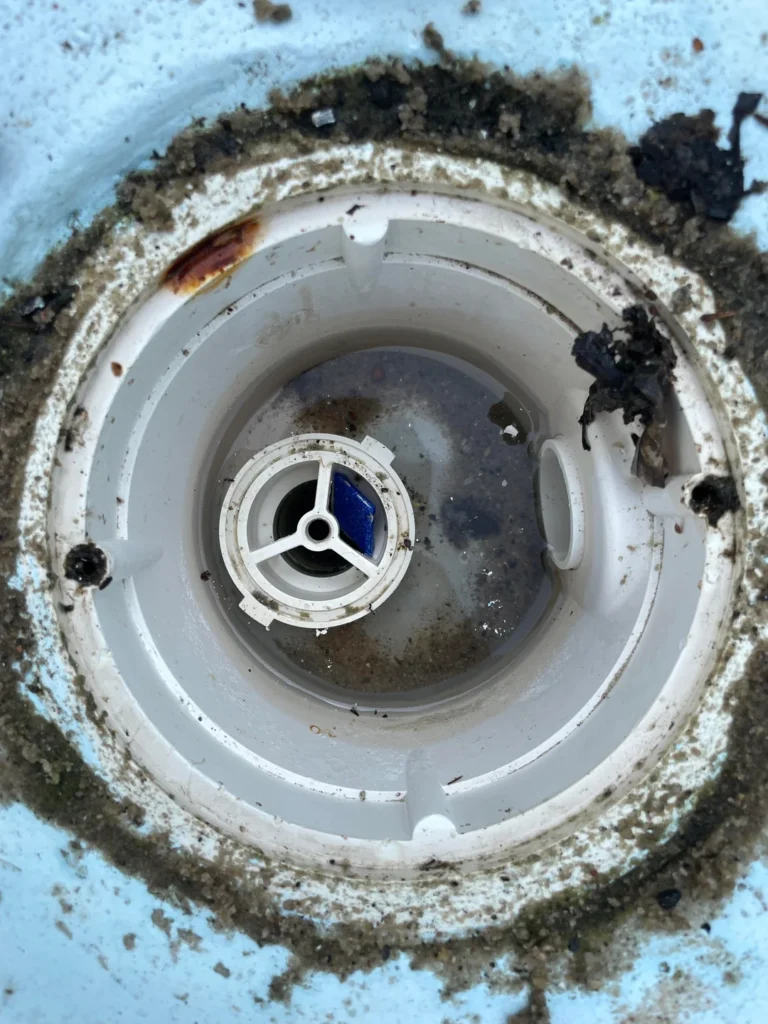
A hydrostatic relief valve is usually located in the main drain pot at the deepest point of the pool, or in a sump area connected to the main drain assembly depending on pool design. It is typically a one way style relief point that can open to relieve pressure beneath the pool. Not every pool has one. Many pools rely on different structural designs and drainage conditions. When a pool does have one, it is usually installed as a safety measure in areas where groundwater pressure can become a problem.
Because it sits at the deepest point, any water movement there can be hard to spot. That is why hydrostatic valve issues are often diagnosed by patterns and supporting signs rather than by simple visual inspection.
Hydrostatic valve symptoms that pool owners actually notice
Hydrostatic valve issues usually appear in one of two ways. The first is water entering the pool. After heavy rain or rising groundwater, a pool may look like it is filling from the floor area, or you may notice cloudy water at the deep end even though you did not top up. This can happen when groundwater is pushed through the relief valve into the pool.
The second pattern is suspected water loss. Pool owners sometimes blame the hydrostatic valve when the pool level drops. In most normal conditions, the hydrostatic valve is not a typical outward leak point. It is meant to open inward under pressure. But if the valve is damaged, stuck partially open, or the assembly is compromised, it can contribute to abnormal water movement that may be interpreted as a leak.
A third clue is recurring deep end debris or fine silt entering the pool after rain. That can indicate groundwater intrusion through the main drain area, which can be linked to a relief valve opening.
Groundwater pressure and why hydrostatic valves matter
Groundwater pressure is a real structural risk. If you drain a pool in an area with high groundwater, the pool shell can lift or shift . This is especially relevant a er heavy rain, in areas with poor drainage, and in some soil types that hold water. The hydrostatic relief valve is designed to reduce that risk by allowing water pressure under the shell to equalise.
This is why full draining is often discouraged unless groundwater conditions are controlled. A functioning relief valve can help, but it is not a guarantee in all situations. Understanding this macro vcontext matters because it changes how you approach repairs and water loss decisions.
Hydrostatic valve leak suspicion versus normal leak diagnosis
If you suspect your pool is losing water and you think it might be the hydrostatic valve, do not start at the valve. Start with confirmation and isolation, because most water loss problems come from more common sources like multiport valve waste leaks, skimmer leaks, light niche leaks, and underground return line leaks. A professional pool leak detection inspection can rule these in or out before you disturb the hydrostatic valve unnecessarily.
Use the bucket test to confirm loss beyond evaporation. Then compare pump on versus pump off water loss. Hydrostatic valve related issues are usually not strongly affected by pump operation because the valve is not part of normal circulation pressure. If water loss is much higher when the pump is running, a return line or waste line issue is more likely than a hydrostatic valve problem.
Also observe where the pool level stabilises. Hydrostatic valve issues do not usually cause the pool to stop at a fitting height like skimmer or return leaks do. Many hydrostatic related patterns are tied to rain events and groundwater conditions rather than a fixed height stop.
When the hydrostatic valve is more likely to be involved
The hydrostatic valve becomes more likely in certain conditions. If you notice water entering the pool after heavy rain without topping up, especially if the deep end becomes cloudy first, groundwater intrusion becomes a suspect. If you live in an area with known high water table, and the pool behaviour changes seasonally, hydrostatic relief function becomes more relevant.
Hydrostatic valve involvement is also more likely if the pool has been partially drained recently. Draining changes pressure balance and can disturb components in the main drain area. If unusual behaviour started after draining, the deep end valve area deserves attention.
Physical issues: stuck valve, debris, worn seals, and drain pot problems
Hydrostatic valves can stick if debris, grit, or scale accumulates. A stuck open condition can allow groundwater and silt into the pool. A worn seal can prevent correct closing. A cracked main drain pot or compromised drain housing can create pathways for water movement around the valve area, which may not behave like a normal relief function.
Because this assembly is underwater, diagnosis often requires a careful inspection at the main drain and is usually done by professionals or experienced pool technicians. The key practical point is that mechanical problems at the valve tend to show as water entering the pool from the deep end, not simply as slow water loss.
Safety note: main drain areas and suction hazards
The main drain area is connected to suction plumbing in many pools. Any inspection or service near the main drain should be approached with safety in mind. Suction can be hazardous. If any work is done at the drain area, the pump should be off and the system should be isolated. This is not the place for improvisation.
From a repair perspective, hydrostatic valve servicing should be done carefully to avoid compromising drain seals and to ensure the relief function remains intact.
Repair approaches: service, replacement, and drainage improvements
If the hydrostatic valve is confirmed as faulty, repair typically involves cleaning or replacing the valve mechanism depending on design. In some cases, the valve can be removed and replaced with a compatible part. In other cases, the main drain assembly may require service.
Long term improvements often involve managing groundwater rather than only focusing on the valve. Better site drainage, reducing standing water around the pool, and managing stormwater runoff can reduce the frequency of groundwater pressure events. These broader measures reduce the chance of groundwater intrusion and reduce stress on the relief system.
Hydrostatic relief valves are designed to protect pools from groundwater pressure, not to act as a normal ou low pathway. When issues occur, they often present as water entering the pool at the deep end after rain, fine silt or cloudiness appearing near the main drain, or unusual behaviour after draining. Proper diagnosis starts with standard leak testing first, because most water loss is caused by waste line leaks, skimmer leaks, light niche leaks, and underground plumbing, not by hydrostatic valves. Once those are ruled out and groundwater patterns match, the hydrostatic valve becomes a more realistic suspect.
FAQs
1. How much water loss is normal for a pool?
About 1/4 to 1/2 inch per day from evaporation is normal in warm weather.
2. Can small leaks cause big damage?
Yes. Even a small leak can cause soil erosion, deck damage, and equipment strain over time.
3. How long does leak repair take?
Minor repairs can take a few hours. Major repairs may take several days.
4. Will insurance cover pool leak repairs?
5. How often should I check for leaks?
Get in touch for expert pool care

Need help? we are always here to assist you with expert care
Need Help
+27 10 065 1995
E-mail us
info@poolquest.co.za