Cloudy Pool Cleanup Without Draining
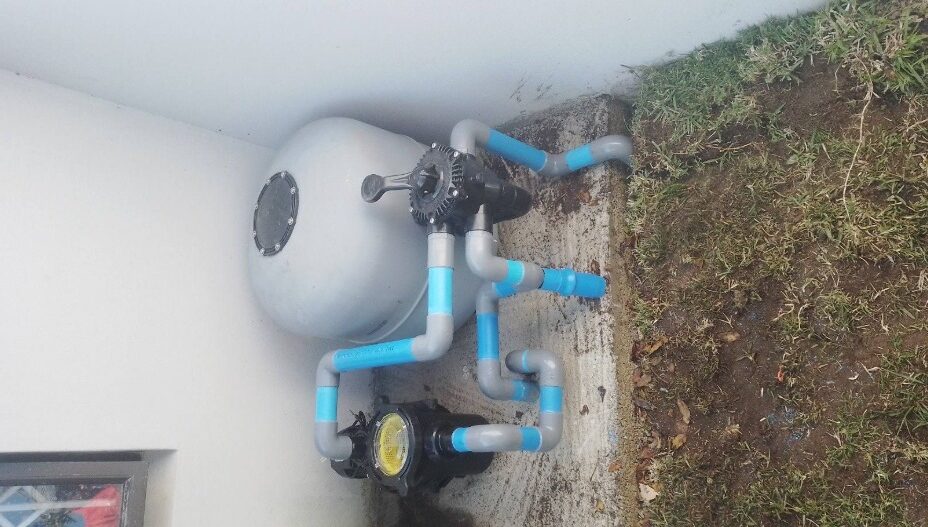
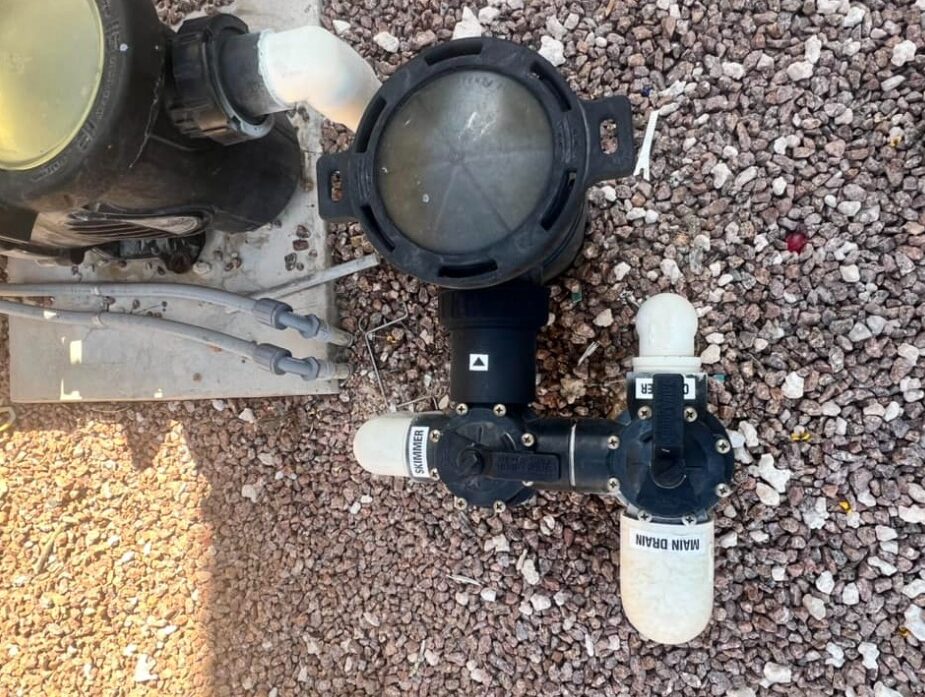
Sand filter with a multiport valve and liquid chlorine
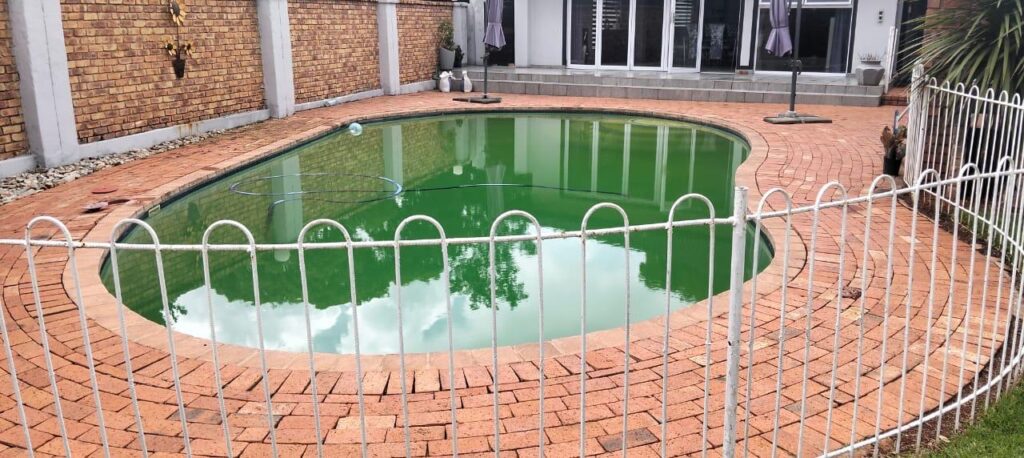
Cloudy pool water is usually caused by suspended fine particles such as dust, pollen, and dead algae, or by the early stages of an algae bloom that has not yet turned the water green. The solution is rarely draining. The reliable approach is to remove organic debris, brush surfaces to disrupt biofilm, stabilise pH so chlorine works efficiently, and then run strong circulation so the sand filter can trap particles through repeated filtration cycles. With a sand filter system, the pressure gauge and multiport valve settings become your control points because they tell you when flow is restricted and when backwashing is needed.
Step 1 Skim and reduce the organic load first
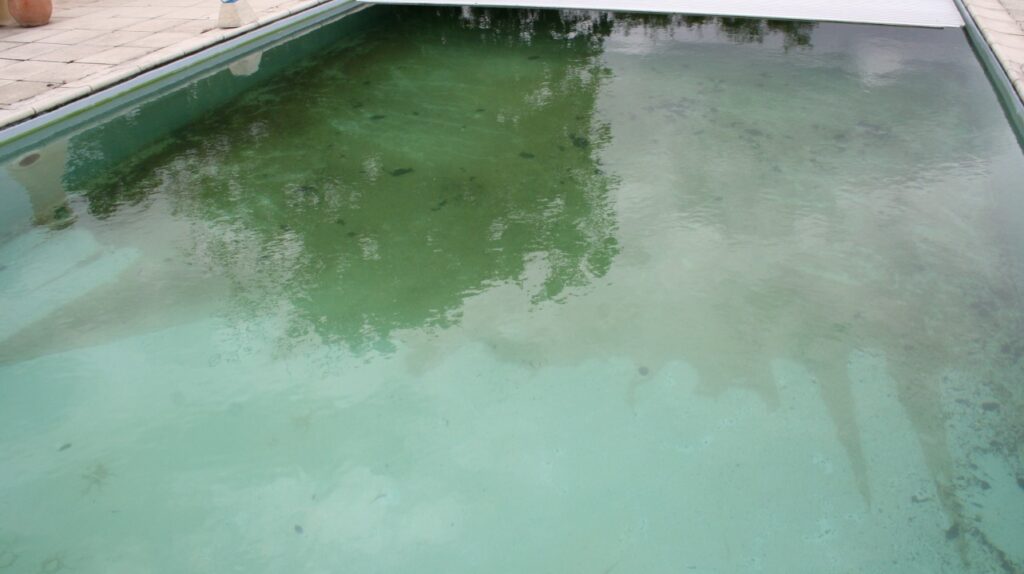
Start with the skimmer net and remove surface debris such as leaves, insects, and floating pollen. Organic material increases chlorine demand and contributes to combined chlorine because it breaks down into compounds that chlorine must oxidise. Empty the skimmer basket and check the pump strainer basket because clogged baskets reduce flow rate and make a pool look permanently hazy even when chemistry is decent. If there is debris on the pool floor, use a deep bag leaf rake gently in the shallow end and around steps, working slowly so you do not stir everything into suspension.
This first stage is about reducing what the filter and sanitizer must fight. When the organic load is lower, free chlorine stays available for sanitation, and the sand filter can focus on fine particulate capture rather than being overwhelmed by decaying debris.
Step 2 Brush walls, waterline, steps, and corners to break film
Brushing is a filtration mul plier. A pool brush removes biofilm, dislodges fine dust, and breaks up early algae colonies along the waterline tile line, the deep end corners, behind ladders, and around fittings where circulation is weakest. In cloudy water situations, the pool often looks worse immediately after brushing because particles that were stuck to the surface are now in the water column. That temporary haze is expected and it is useful, because the sand filter can only remove particles that are moving through the filter tank.
Brush methodically from the waterline down the walls, then across the floor. Focus on dead zones where return jets do not create strong movement. The goal is to mobilise what is clinging to surfaces so the pump and filter can remove it during the polishing stage.
Step 3 Stabilise pH so chlorine is effective
Before you rely on chlorine to clean the water, bring pH into a working range. A practical target is pH 7.2 to 7.6 because chlorine is more active at lower pH than at high pH. If pH is high, a pool can stay cloudy because chlorine becomes less effective and algae can continue to grow slowly even while you keep adding sanitizer. If pH is very low, the water can become aggressive and can irritate swimmers and stress equipment seals.
Use a reliable test kit or quality strips, then adjust in small corrections. Allow circulation me so the pH change distributes through the pool water. In this stage, total alkalinity acts as a buffer, so if pH keeps drifting quickly, alkalinity may also need attention. The objective is not perfect laboratory balance. The objective is a stable zone where chlorine can do its job consistently.
Step 4 Maintain free chlorine using liquid chlorine
Liquid chlorine, typically sodium hypochlorite, is ideal for cloudy pool recovery because it raises free chlorine quickly and does not depend on slow dissolution. Cloudy water needs a consistent sanitizer level, not a once off spike. Test free chlorine, then top up to hold a steady effective level each day while filtration runs. If cloudiness is caused by early algae, steady free chlorine prevents the pool from sliding into green water, and it supports oxidation of organic contaminants that contribute to dullness.
Add liquid chlorine with the pump running. Pour slowly around the perimeter, especially near return jets where mixing is strongest, and then brush lightly to push treated water into corners and along steps. If combined chlorine is present, maintaining an effective free chlorine level helps drive the pool toward breakpoint conditions where chloramines are reduced.
Step 5 Increase circulation and filtration me for the polishing stage
A sand filter clears cloudy water through repeated passes, not instantly. The pump run time and circulation pattern determine how quickly suspended particles reach the filter media. During cloudy recovery, run the pump much longer than normal so the system can complete more turnover cycles. As flow pushes water through the sand bed, particles get trapped in the filter media and clarity improves gradually.
You will often see clearing in stages. The shallow end becomes clearer first, then the steps sharpen, and then the deep end floor becomes visible. This is the polishing stage. The main mistake is reducing pump run me too early. Keep circulation steady until the water is genuinely clear, not just improved.
Step 6 Backwash based on pressure rise, then use the rinse cycle every me
The pressure gauge is your indicator of filter loading. As the sand bed traps debris and fine particles, resistance increases and filter pressure rises. When pressure rises enough, the pump struggles to push water through, flow rate drops, and clearing slows down. That is when backwashing becomes productive.
If you do not have a baseline yet, create one now. Do a proper backwash and rinse, return the valve to Filter, let the system stabilise for 5 to 10 minutes, then record the gauge reading. That number is your clean pressure for this system.
Backwash when the pressure rises about 20 to 25 percent above that baseline or when return jets feel no ceably weaker. Always use the rinse setting after backwash for 20 to 30 seconds. Rinse settles the sand bed and flushes dirty water to the waste line so it does not blow back through the returns and re cloud the pool. This routine also helps prevent channeling, where water forms paths through the sand and reduces filtration quality.
Step 7 Clarifier can help only when chemistry is stable
If the water is still hazy after chlorine is stable and filtration is running well, a polymer clarifier can help by coagulating ny particles into larger clumps that the sand filter captures more easily. Clarifier is most useful in the final haze stage when the pool is already sanitary and improving. It is not a substitute for free chlorine maintenance, pH control, and filter cleaning.
Use clarifier sparingly and follow dosing instructions. Overdosing can create gummy residue that makes filtration slower. If the pool is trending toward green, focus on sanitizer and brushing first, because clarifier does not kill algae.
Step 8 What to expect over 48 to 72 hours
A cloudy pool often improves with a predictable pattern when the system is working. After brushing and stabilising chlorine, the water may look unchanged or slightly worse for a short period because more particles are suspended. Within a day, clarity typically begins to improve as the sand filter traps particles. Over the next days, the water becomes progressively sharper, especially if you backwash at the right pressure rise and keep free chlorine stable.
If the pool shifts from cloudy to green, treat it as an algae bloom starting. Increase consistency of free chlorine, brush daily, and keep filtration running. If the pool stays cloudy with stable chlorine and stable pH, focus on filtration variables, especially filter pressure, pump run me, and whether the sand filter is channeling or overdue for deep cleaning.
Simple daily plan for a cloudy pool without draining
Skim the surface, empty skimmer and pump baskets, and remove floor debris with a leaf rake if needed. Brush the waterline, walls, steps, and floor to break biofilm and lift fine dust. Test pH and free chlorine, then correct pH toward 7.2 to 7.6 and maintain free chlorine consistently using liquid chlorine. Run the pump long enough for multiple turnover cycles. Backwash when filter pressure rises about 20 to 25 percent above baseline and always rinse after backwashing before returning to Filter.
FAQs
1. How much water loss is normal for a pool?
About 1/4 to 1/2 inch per day from evaporation is normal in warm weather.
2. Can small leaks cause big damage?
Yes. Even a small leak can cause soil erosion, deck damage, and equipment strain over time.
3. How long does leak repair take?
Minor repairs can take a few hours. Major repairs may take several days.
4. Will insurance cover pool leak repairs?
5. How often should I check for leaks?
Get in touch for expert pool care

Need help? we are always here to assist you with expert care
Need Help
+27 10 065 1995
E-mail us
info@poolquest.co.za